Executive Summary: Synthetic arbitration is an informal but powerful escalation tool that uses a legal notice of arbitration to pressure Amazon toward resolution before full AAA arbitration. It’s faster, less costly, and effective for sellers facing suspension, unreleased Fulfillment by Amazon (FBA) inventory, lost or damaged inventory reimbursement, withheld funds, or ignored appeals. Acting strategically can restore your account or funds without months of delay.
For Amazon sellers, time is money. When an account is suspended or funds are withheld, every day offline can result in thousands of dollars in lost sales. Most sellers start with the standard appeals process. Some escalate to a Quantum Appeal. But when Amazon remains silent or unresponsive, the next step may be something many sellers haven’t heard of yet: Synthetic Arbitration.
It’s not a buzzword or a shortcut. It’s a strategic legal process designed to move Amazon toward resolution without the full cost and time commitment of formal arbitration.
What Synthetic Arbitration Actually Means
Synthetic arbitration isn’t a formal term in Amazon’s Business Solutions Agreement. It’s a proprietary ESQgo-developed strategy that mimics the early stages of arbitration through the American Arbitration Association (AAA) without filing a full case.
Here’s how it works:
When Amazon refuses to respond or reinstate an account, sellers can draft and submit a Notice of Arbitration, a formal legal demand that signals intent to arbitrate. This notice prompts Amazon’s internal or external legal team to engage directly. In many cases, Amazon reinstates the account or releases funds before an actual arbitration ever occurs.
In short, Synthetic Arbitration is a pressure tactic. It shows Amazon you’re serious and willing to enforce your rights under contract without immediately triggering the expenses of a full arbitration proceeding.
For a free legal consultation, call 888-600-1925
Why Amazon Sellers Use Synthetic Arbitration
Amazon’s internal appeal process is often opaque and repetitive. Sellers can spend months sending multiple Plans of Action with no progress or feedback.
ESQgo’s Synthetic Arbitration® (SynArb®) cuts through that bottleneck. It works because:
- Amazon’s Legal Team Gets Involved: A formal notice of arbitration elevates the issue to Amazon’s attorneys, not Seller Performance.
- It Signals Legal Readiness: Amazon knows arbitration costs time and money for them, too. A credible filing threat can prompt faster internal review.
- It’s Faster Than Waiting for AAA Scheduling: Traditional arbitration through the AAA can take 8–14 months. Synthetic Arbitration often prompts responses in approximately half the time of formal arbitration.
For sellers losing thousands in daily revenue, those weeks matter.
Click to contact our amazon law lawyers today
When Synthetic Arbitration Makes Sense
Complete a Free Case Evaluation form now
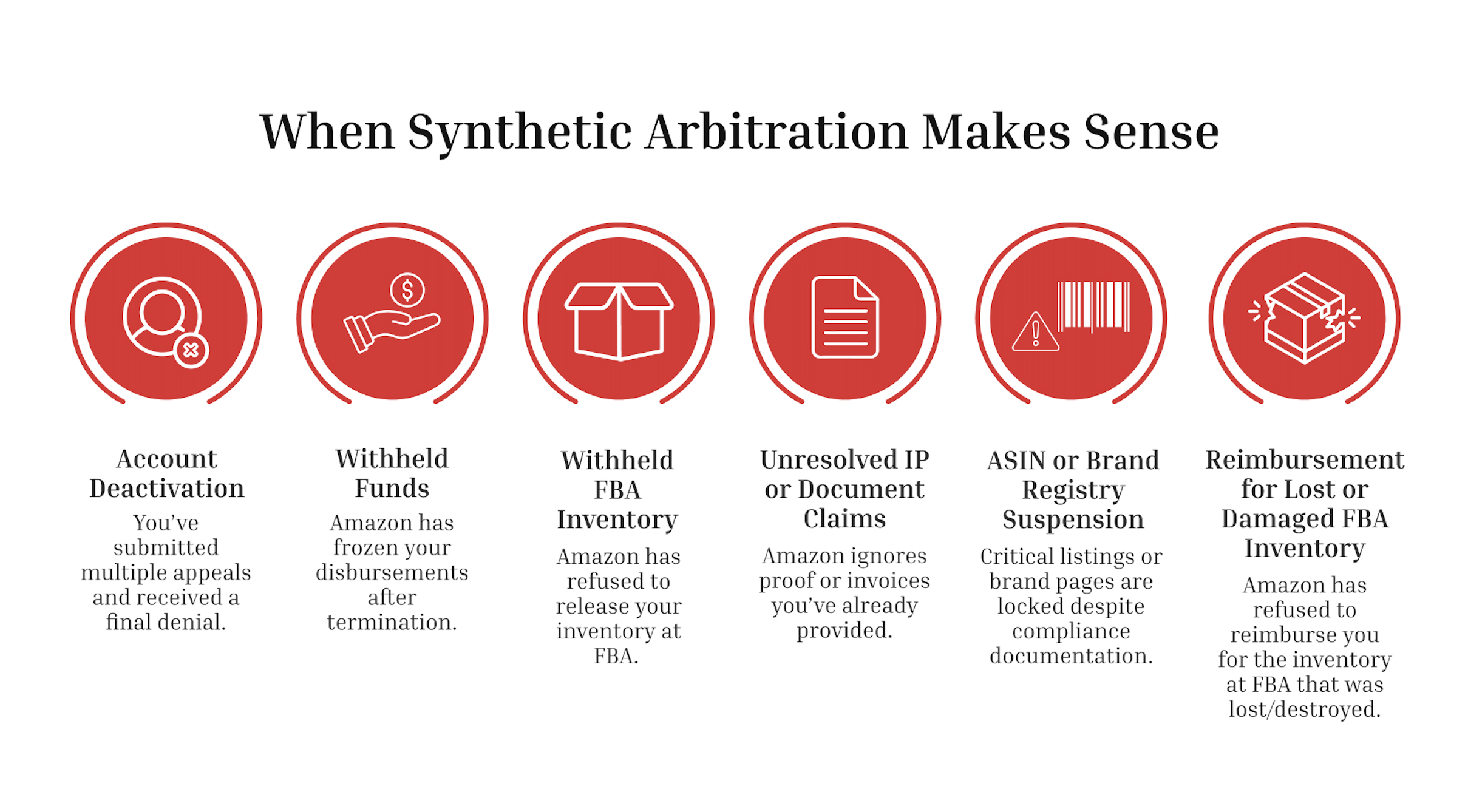
Not every suspension warrants a Synthetic Arbitration. It’s most effective in cases where you’ve exhausted internal appeals or when Amazon is withholding significant funds or inventory.
Common scenarios include:
- Account Deactivation: You’ve submitted multiple appeals and received a final denial.
- Withheld Funds: Amazon has frozen your disbursements after termination.
- Withheld FBA Inventory: Amazon has refused to release your inventory at FBA.
- Reimbursement for Lost or Damaged FBA Inventory: Amazon has refused to reimburse you for the inventory at FBA that was lost/destroyed.
- Unresolved IP or Document Claims: Amazon ignores proof or invoices you’ve already provided.
- ASIN or Brand Registry Suspension: Critical listings or brand pages are locked despite compliance documentation.
If your case meets these conditions and traditional escalation routes have failed, synthetic arbitration can trigger a response faster than a standard AAA filing.
How Synthetic Arbitration Differs from Formal Arbitration
Synthetic arbitration is a preliminary action, not a full legal proceeding.
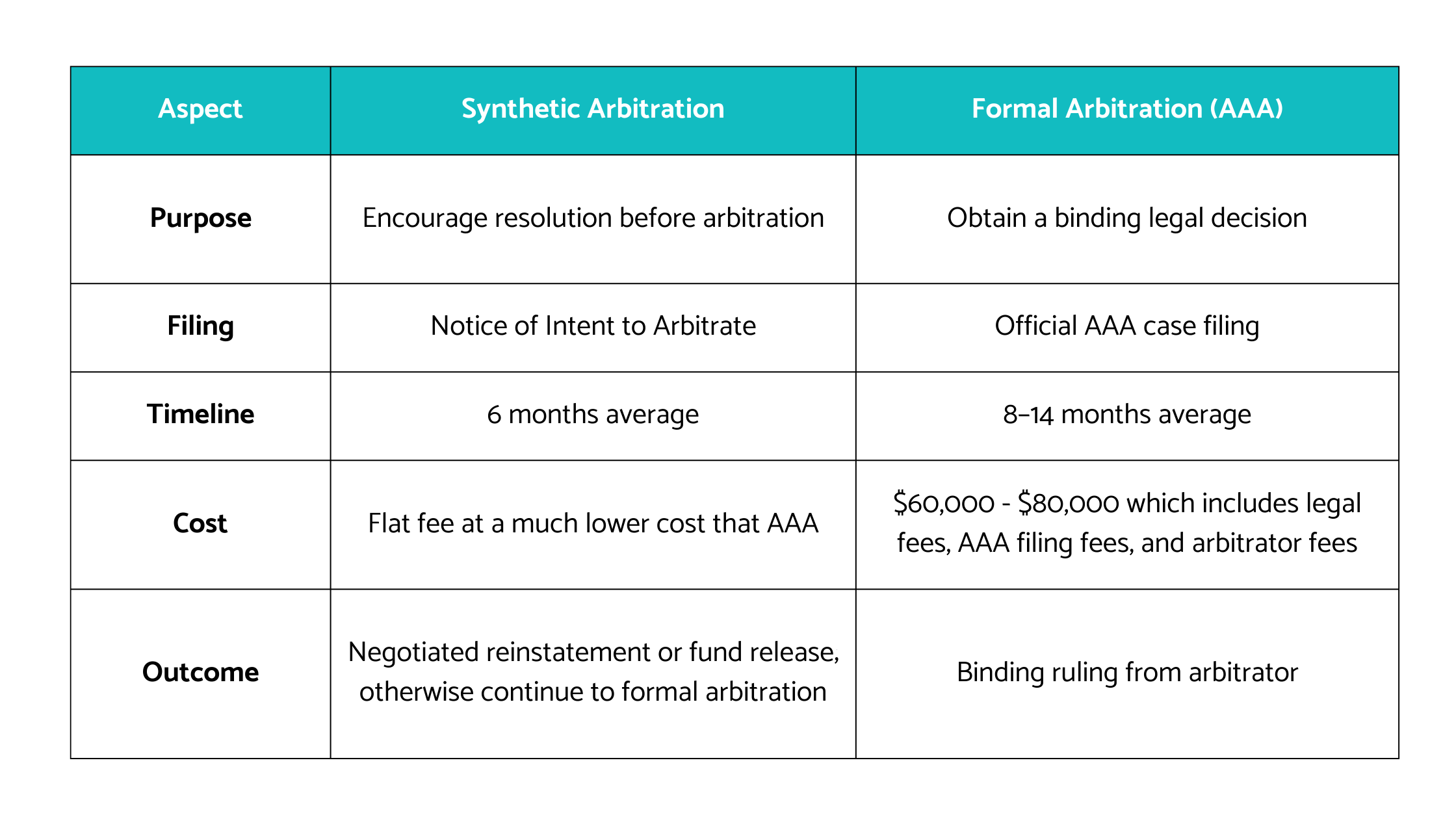
Many sellers use Synthetic Arbitration as a final step before investing in full arbitration. If it works, it saves time and money. If not, it still sets the stage for a smoother transition to AAA.
What Makes It Effective
Synthetic Arbitration works because it forces Amazon to acknowledge the seller’s contractual rights. The Business Solutions Agreement between Amazon and its sellers includes a mandatory arbitration clause, meaning that all disputes must be resolved through arbitration rather than in court.
By filing a notice of arbitration, you’re asserting that right and compelling Amazon to act before costs escalate. It shifts the conversation from customer support to legal obligation.
How to Prepare Before Filing
To maximize your chances of success, prepare as though you were filing a real arbitration case:
- Collect Documentation: Gather all appeal correspondence, suspension notices, invoices, and case IDs.
- Calculate Damages: Estimate lost revenue and withheld funds.
- Outline Your Case Clearly: Identify the policy issue, Amazon’s breach, and your compliance proof.
- Stay Professional: The notice must be formal, factual, and directed to the correct Amazon legal contact.
Even if your Synthetic Arbitration doesn’t lead to reinstatement, the groundwork you lay here will strengthen your formal arbitration filing if needed.
The Bottom Line
Synthetic Arbitration gives sellers leverage. It combines legal precision with strategic pressure to move Amazon toward action, fast. For sellers who’ve done everything right but still face silence, it’s often the most efficient next step.
If you’re facing a dead-end with Amazon and losing revenue daily, ESQgo can help prepare and deliver a professional synthetic arbitration notice that gets results. Our team handles the drafting, documentation, and escalation process efficiently so you can focus on rebuilding your business.
Contact ESQgo today to discuss whether Synthetic Arbitration is the right strategy for your case.
Call or text 888-600-1925 or complete a Free Case Evaluation form