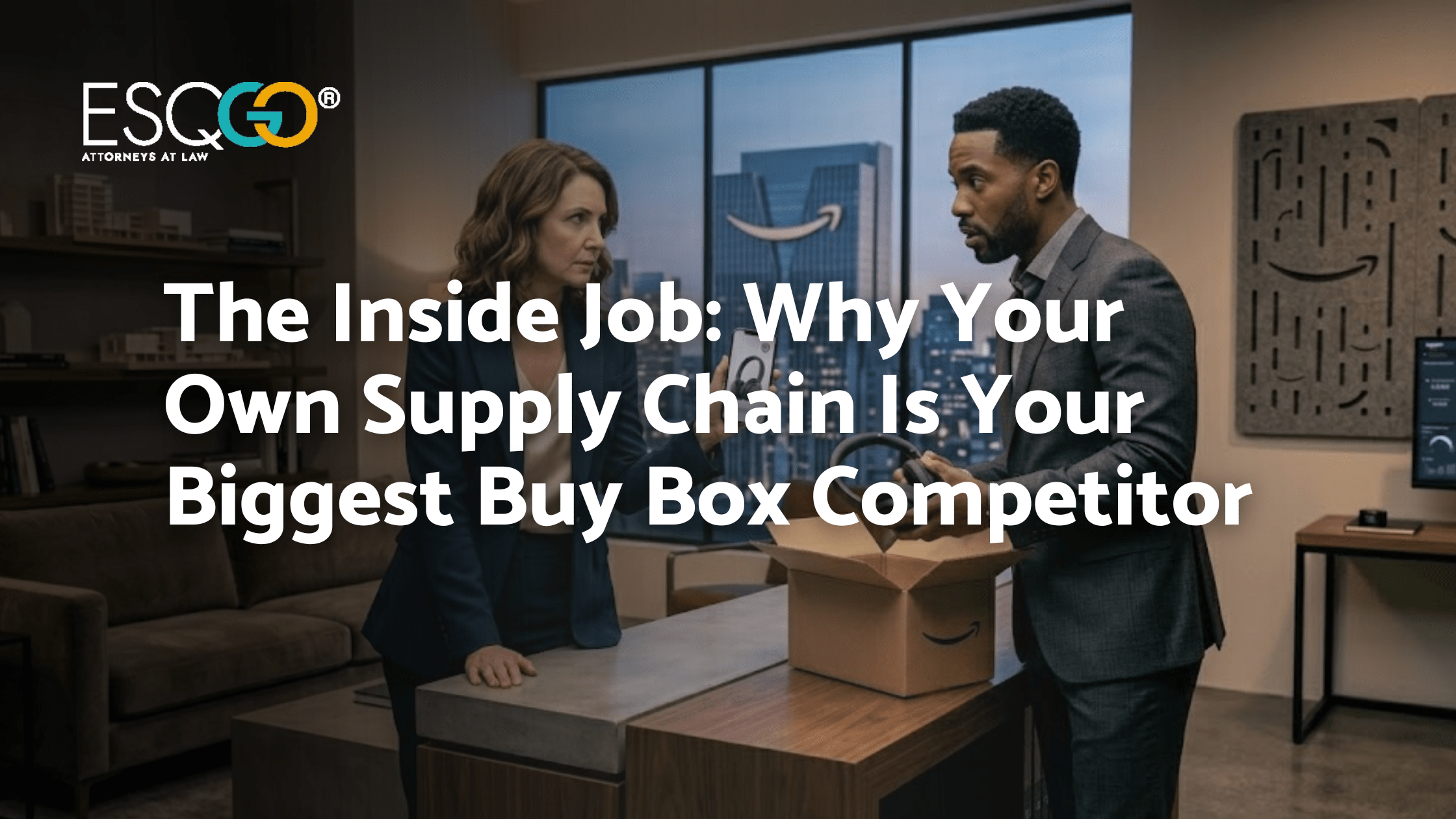
Executive Summary: Most Buy Box loss is caused by internal supply chain leakage, not external hijackers. Distributors, liquidators, and unauthorized resale channels introduce authentic goods that platforms allow. Solving the problem requires forensic tracing, distribution control, and enforceable contracts, not just takedown requests.
Most brands think they’re losing the Buy Box to outside sellers. They’re not.
They’re losing it to their own supply chain.
If unauthorized sellers keep appearing, undercutting your price, and surviving every takedown attempt, the problem usually isn’t external. It’s internal leakage—inventory moving through distributors, wholesalers, or liquidators into the hands of sellers you never approved.
This is the “silent Buy Box loss” most brands don’t detect until margins collapse.
The Silent Buy Box Loss
Buy Box suppression rarely happens all at once. It starts quietly:
- A second seller appears at a slightly lower price
- Your conversion rate dips
- Customer complaints increase
- Reviews mention packaging or quality issues you don’t recognize
At first, it looks like normal competition. But when those sellers consistently have inventory and survive enforcement attempts, you’re not dealing with random resellers.
You’re dealing with your own product moving through unintended channels.
For a free legal consultation, call 888-600-1925
How Distribution Creates Internal Competition
Unauthorized sellers rarely manufacture your product. They acquire it. Common leakage points include:
- Distributors selling excess inventory outside agreed channels
- Retail arbitrage from big-box stores or online clearance
- Liquidators reselling returned or overstock units
- International diversion into U.S. marketplaces
Each of these sources introduces authentic inventory into Amazon, but outside your control.
From a legal standpoint, this matters. Under the first sale doctrine in U.S. trademark law, once a product is sold, it can generally be resold. That means platforms like Amazon often allow these sellers to remain active.
They’re selling real goods. That limits what Amazon will do.
Why Platforms Won’t Fix This for You
Amazon does not enforce distribution agreements. It enforces customer trust and policy compliance. If a reseller has:
- Authentic inventory
- Valid invoices
- Acceptable performance metrics
Amazon typically allows them to compete for the Buy Box. This is why brands often see:
- Rejected IP complaints
- Reappearing sellers after removal
- Continued price erosion despite enforcement efforts
Amazon is not ignoring the issue. It is following its rules.
Click to contact our amazon law lawyers today
Forensic Enforcement: Finding the Source
If you want to solve the problem, you have to trace it. That starts with forensic enforcement. Effective methods include:
Test Buys: Purchase from unauthorized sellers to analyze packaging, lot codes, inserts, and fulfillment methods.
Supply Chain Mapping: Compare seller behavior, shipping origin, and inventory patterns to known distributors or partners.
Documentation Review: Cross-reference invoices, batch numbers, and product variations to identify leakage points.
Pattern Analysis: Track which sellers appear repeatedly and when, often tied to restock cycles or distribution events.
This process identifies where control is breaking down. Without it, enforcement remains reactive.
Complete a Free Case Evaluation form now
Fixing the Root Problem: Control, Not Complaints
Removing one seller does not fix systemic leakage. You have to control the source. That requires two things:
1. Distribution Control
- Limit the number of authorized sellers
- Use clear channel restrictions
- Monitor inventory flow across partners
- Avoid oversupplying distributors without accountability
Brands that treat distribution as open-ended often create their own competition.
2. Contract Enforcement
Strong agreements matter. They should include:
- Clear resale restrictions
- Channel-specific limitations (e.g., no marketplace resale)
- Audit rights and enforcement provisions
- Penalties for unauthorized diversion
While enforcement depends on state contract law, well-drafted agreements create leverage. Without them, recourse is limited.
Optional: How to Audit Your Distribution Network
If unauthorized sellers are persistent, run a basic audit:
- List all distributors and wholesale partners
- Identify which SKUs are most affected
- Compare pricing behavior across channels
- Conduct test buys from top unauthorized sellers
- Match findings to supply chain sources
Most brands find at least one leakage point within the first review.
Why This Matters for Revenue
Unauthorized resellers don’t just compete. They reset your pricing floor.
Brands lose a significant amount of marketplace revenue due to unauthorized and grey-market sales. That loss compounds through:
- Lower margins
- Reduced ad efficiency
- Weakened brand positioning
- Increased compliance risk
Fixing the supply chain often produces faster results than filing more complaints.
Control Starts Internally
If your product keeps showing up where it shouldn’t, the issue isn’t visibility. It’s control.
The brands that win on Amazon don’t just enforce externally. They eliminate leakage internally. That’s how they stabilize pricing, protect the Buy Box, and reduce enforcement costs over time.
If unauthorized sellers are consistently undercutting your listings, ESQgo can help you trace supply chain leakage, implement enforceable distribution controls, and remove sellers using strategies that hold up under Amazon review and legal scrutiny.
Contact ESQgo to take back control of your Buy Box.
Want more info? Request a Brand Enforcement Report from ESQgo to see where your business could be at risk.
FAQs
- Why do unauthorized sellers have my product?
They often source it from legitimate distribution channels such as wholesalers or liquidators. - Can Amazon remove sellers with real inventory?
Not usually. Authentic goods are generally allowed under the first sale doctrine. - What is supply chain leakage?
It’s when products move outside intended sales channels and end up with unauthorized sellers. - Do contracts help prevent resale?
Yes. Strong agreements create enforceable restrictions and legal leverage. - What is a test buy?
A purchase made from an unauthorized seller to trace the origin and condition of the product.
How do I stop repeated Buy Box loss?
By identifying leakage sources and enforcing distribution control, not just removing individual sellers.
Call or text 888-600-1925 or complete a Free Case Evaluation form