Key Takeaways
|
One suspension can shut down your entire Amazon business overnight.
For most sellers, an Amazon account suspension isn’t just a technical issue—it’s an immediate business crisis. Your listings disappear, your revenue stops, your rankings collapse, and your cash flow is instantly disrupted.
For many businesses, a single enforcement action can mean weeks or months of lost sales, broken supply chains, and long-term brand damage.
What makes Amazon suspensions even more difficult is the complexity of the appeals process. Reinstatement is not based on explanations, intent, or apologies, it is based on systems, compliance, and risk control. Amazon evaluates whether a seller understands the root cause of the violation, has fixed the operational failure, and has built preventive systems that reduce future risk to customers and the marketplace. Most reinstatement failures happen not because sellers are dishonest, but because their appeals lack structure, clarity, and compliance alignment.
If your account is suspended or if you want to be prepared before it happens, this blog gives you a clear, structured, and reliable framework to protect your business, reduce reinstatement risk, and navigate Amazon’s enforcement process with confidence and control.
For a free legal consultation, call 888-600-1925
What is a POA?
An Appeal Letter and a Plan of Action (POA) are often used interchangeably. A POA is a paper you make and give to Amazon to convince them to lift your account suspension, refund your money, and give back your products.
Amazon wants you to explain what you will do to fix the problems that led to the suspension. Also, you need to tell them how you will stop these problems from happening again.
In other words, the POA should clearly explain the actions you will take to address the problem and prevent it from happening again. Self-explanatory, right?
Sellers can appeal deactivation and review issues on the Account Health page.
For a free legal consultation, call 866-662-0617
Best Practices for Writing an Effective Plan of Action (POA)
When crafting an Amazon appeal plan, it is crucial to adhere to Amazon’s best practices. Amazon recommends responding to these three questions in the POA.
- What was the root cause of the issue? Please identify the main factors that led to the problem.
- What actions will you take to resolve the issue? If the issue persists, please explain the specific steps to be taken to resolve the current problem.
- What steps will you take to prevent future issues from occurring?
Identify the Root Cause Clearly
Amazon expects sellers to precisely identify the true root cause of the issue, not just the visible symptom. This means isolating the exact operational, procedural, or compliance failure that led to the violation, such as gaps in supplier verification, listing creation processes, inventory handling, documentation management, quality control systems, or internal approval workflows.
Generic explanations like “human error” or “system mistake” are not sufficient. A strong POA demonstrates that the seller fully understands where the breakdown occurred, why it happened, and how that failure created risk to customers or the marketplace.
This clarity is critical because Amazon evaluates whether the seller has genuine operational insight or is merely responding defensively.
Define Specific Corrective Actions
The corrective action section must focus on what has already been done or is actively being done to resolve the current issue.
Amazon prioritizes execution over intention, so this part of the POA should describe concrete operational steps rather than vague commitments. Effective corrective actions include supplier audits, product authenticity verification, inventory inspections, staff retraining, restructuring the listing process, document validation systems, internal compliance reviews, and process redesigns.
This section should make it clear that the problem is not theoretical—it is being actively addressed through structured, traceable actions that directly eliminate the current risk.
Establish Long-Term Preventive Controls
Prevention is the most critical element of Amazon’s POA evaluation process. Amazon is not only assessing whether the current issue is resolved, but whether the seller’s business systems are capable of preventing recurrence.
This section should focus on permanent structural changes, such as implementing standard operating procedures (SOPs), automated compliance checks, internal audit mechanisms, approval workflows, risk monitoring systems, escalation protocols, and accountability frameworks.
The objective is to demonstrate that the business now operates with proactive controls that detect, block, and correct risks before they reach customers or Amazon’s ecosystem.
Follow Structural and Communication Best Practices
Beyond content, Amazon also evaluates how the POA is written. Best-in-class POAs are clear, structured, factual, and professional in tone. They avoid emotional language, defensiveness, excuses, and blame-shifting. Each section is logically organized, easy to review, and directly tied to risk reduction.
The language is operational, not emotional, and the focus is on systems, processes, and controls rather than explanations or justifications. A strong POA reads like a compliance document rather than a personal appeal and reflects accountability, ownership, and process maturity.
If you want to understand better how the Amazon Account Health Team operates and how the Amazon Appeals Process operates, we’d love for you to check out our blog post.
Click to contact our amazon law lawyers today
What should an Amazon Plan of Action (POA) look like?
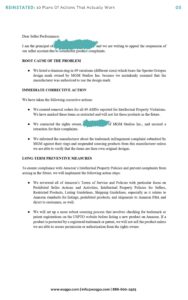
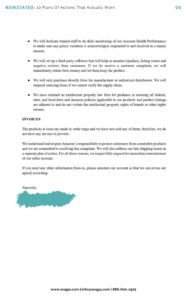
A well-written POA is persuasive. Take it seriously and strategically. Keep it concise and respectful, and address the specific issues that led to the suspension. Express remorse and provide a detailed Plan of Action (POA) with three parts: root cause explanation, immediate actions, and preventative measures.
Examining successful POAs offers valuable insights and inspiration for creating a persuasive, effective document.
Here is an example of a good and effective plan of action template for amazon we wrote for one of our clients:
Click to contact our amazon law lawyers today
Complete a Free Case Evaluation form now
Components Of An Effective Appeal Letter
Your appeal letter should include several key components to maximize your chances of success.
Clear Acknowledgment of the Issue
An effective appeal letter begins with a clear and accurate understanding of the reason for the suspension. This shows Amazon that you have carefully reviewed the suspension notice and fully grasp the nature of the violation.
Acknowledging the issue upfront demonstrates responsibility, seriousness, and professionalism, which are critical factors in building credibility with the Account Health and Appeals teams.
Precise Identification of the Root Cause
The appeal must clearly explain the root cause of the problem, not just the outcome. Whether the suspension is performance-based, IP-based, or compliance-related, Amazon expects sellers to show they understand exactly why the violation occurred.
This requires identifying the underlying operational or process failure that triggered the suspension, rather than offering generic explanations. A strong appeal reflects accountability, insight, and operational awareness.
Demonstration of Responsibility and Commitment to Improvement
Amazon looks for sellers who take ownership, not those who shift blame. A well-written appeal communicates genuine accountability, professional regret, and a clear commitment to improving business practices.
This is reinforced through a structured Amazon Plan of Action that shows the seller is serious about correcting mistakes, strengthening internal systems, and operating in full compliance with Amazon’s standards going forward.
Alignment With Amazon’s Compliance Expectations
A successful appeal is aligned with how Amazon evaluates risk and seller reliability. It focuses on operational control, compliance systems, and long-term trustworthiness rather than emotional explanations.
The letter should communicate that the seller is not only fixing a problem but building a more stable, compliant, and responsible business structure that reduces future risk to customers and the marketplace.
When you receive an Amazon suspension notice, read and understand it thoroughly to identify the reason for the suspension. There are different types of suspensions, including performance-based, IP-based, and compliance-based.
It’s important to show real regret and create a good Amazon Plan of Action if you want to show that you are serious about improving your sales with Amazon.
Complete a Free Case Evaluation form now
How To Research And Gather Evidence For Your Appeal Letter
Before writing your appeal letter, conduct thorough research and gather evidence to support your case. This involves
- Reviewing Amazon’s policies and guidelines to understand the specific violation that led to your suspension.
- Gathering relevant documents, such as customer emails, invoices, or proof of corrective actions, is also recommended.
- By presenting compelling evidence in your appeal letter, you can demonstrate to Amazon that you have addressed the issue and are committed to providing an excellent customer experience.
How to Write an Effective Amazon Appeal Letter
- Your appeal letter should be concise and to the point while acknowledging the suspension.
- Give a concise and well-organized explanation of what happened leading up to your suspension.
- Address each concern that Amazon brought up and explain the actions you have taken to fix the issue.
- When drafting your POA, use concise language and stick to the facts.
- Take responsibility, show genuine remorse, and provide a detailed plan of action to prevent future violations.
Safeguard Your Seller Account With Expert Support
When your Amazon seller account is suspended, every day offline impacts your revenue and business stability. Delayed or poorly structured appeals often prolong reinstatement and increase risk.
ESQgoⓇ, provides focused legal support for Amazon sellers by identifying the true cause of suspension, preparing compliant appeal submissions, and developing strong, risk-aligned Plans of Action that meet Amazon’s expectations.
Why work with ESQgo®:
- Fast, strategic reinstatement support
- Deep expertise in Amazon policies and appeals
- End-to-end appeal handling
- Proven account recovery experience
Call 866-203-0541 or visit our contact page to request your free initial consultation. Let us help you protect your business and get back to selling with confidence.
Frequently Asked Questions
1. What is an Amazon Plan of Action (POA)?
An Amazon Plan of Action (POA) is a structured document submitted during an appeal to explain the root cause of a policy violation, the corrective actions taken to resolve the issue, and the preventive measures implemented to stop future violations. Amazon uses the POA to assess seller risk, operational reliability, and long-term compliance before reinstating a suspended account.
2. Why do Amazon seller accounts get suspended?
Amazon seller accounts are commonly suspended due to performance issues, policy violations, intellectual property complaints, inauthenticity claims, product compliance failures, customer complaints, or documentation problems. Suspensions can be performance-based, IP-based, or compliance-based, and each category requires a different appeal and POA strategy.
3. How long does the Amazon appeal process take?
The Amazon appeal process can take anywhere from a few days to several weeks, depending on the severity of the violation, the quality of the appeal, and the accuracy of the submitted Plan of Action. Poorly written or incomplete appeals often result in multiple rejections and extended account inactivity.
4. What makes a POA successful for Amazon reinstatement?
A successful POA clearly identifies the true root cause, provides specific corrective actions, and establishes long-term preventive controls. It must be structured, factual, and compliance-focused. Amazon prioritizes operational fixes, system improvements, and risk prevention—not emotional explanations or generic promises.
5. Can I write my own Amazon appeal, or should I use a professional service?
While sellers can write their own appeals, many reinstatement failures occur due to weak root cause analysis, vague corrective actions, and poor structure. Professional Amazon appeal services and seller attorneys improve success rates by aligning POAs with Amazon’s internal review standards, compliance frameworks, and risk assessment models.
Call or text 888-600-1925 or complete a Free Case Evaluation form